
Navigating Privacy and Compliance in Tracking and Measurement

Today, digital marketing and tracking come with higher expectations than ever before. GDPR and ePrivacy have changed the landscape, it’s no longer just about collecting data, but doing it responsibly and in full compliance.
One example that shows how complex privacy in tracking can be is the recent case involving the use of the Meta Pixel in sensitive industries.
A Practical Guide To Privacy-First Measurement
At Ctrl Digital, we’ve helped many organizations navigate the balance between measurement, privacy, and compliance. In this guide, we share our best practices and insights for building a tracking setup that respects user privacy, meets legal requirements, and still provides meaningful insights for your business.
Risk vs Reward Approach
When working with tracking and measurement, it’s rarely a simple yes-or-no decision. Every approach comes with trade-offs – collecting more data can deliver better insights, but also higher privacy risks. By clearly outlining both the potential benefits and the risks, you create a balanced view that supports informed and responsible data-driven decisions. This risk vs reward approach ensures your measurement strategy aligns with business goals while staying in sync with your company’s own established guidelines.
This balance is mainly a trade-off between commercial risk and legal risk. There must always be a clear risk owner. As a specialist, this decision is most likely above your pay grade. Your role is to help prepare the material together with the DPO, so the risk owner can make the final call.
Align Your Organization Before Moving Forward
Privacy-focused tracking involves many parts of the business. Marketing, IT, and Legal all play key roles. Identify who owns the tracking setup, who manages consent, and who approves changes to your data strategy. Aligning these teams and mandates early builds clarity, avoids surprises, and ensures your privacy and measurement strategy is realistic, in sync with your company’s established guidelines and supported.
Capabilities Instead Of Tools
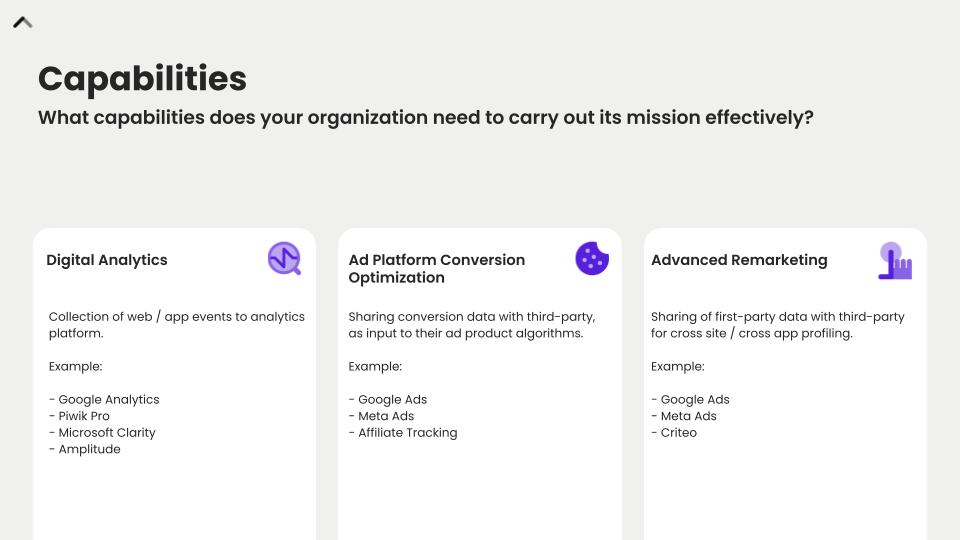
Instead of starting with which tools to use, begin by defining the capabilities your organization needs to do its job effectively. Is it the ability to measure campaign performance, track user journeys, or manage consent properly? Once the needs are clear, it’s easier to choose tools and solutions that support both your business goals and privacy requirements.
For example, if you want to work with data activation and retargeting, you will need some level of data sharing with the advertising platforms. It’s difficult to avoid.
Apply The Principle Of Data Minimization
Only collect the data that’s truly needed to deliver the capabilities your organization needs. Avoid gathering information just because it’s possible. Document your data collection decisions, explain why each data point is required, and keep access limited to those who need it. Applying data minimization principles helps keep your tracking setup lean, in sync with your company’s own established guidelines, and easier to maintain and manage while protecting user privacy.
Document Your Tracking Setup And Data Usage
Keep a clear record of what data is collected, which platforms it’s shared with, and how it’s used. This helps ensure transparency and makes it easier to assess compliance risks. In some cases, a Data Protection Impact Assessment (DPIA) may be required.
Also make sure to document all internal discussions and decisions made on this topic. This creates accountability and helps demonstrate compliance over time.
Limiting Data Access And Sharing
Restrict access to tracking and analytics data to only those who need it for their work. Review user permissions regularly and remove unnecessary access. Be clear about what data can be shared externally and under what conditions. Limiting data access and data sharing reduces the risk of misuse, supports compliance with your company’s guidelines, and promotes a responsible approach to privacy within your organization.
Using Infrastructure Like Server-Side Tracking For Control
Server-side GTM gives you greater control over what data is collected and shared with external platforms. By filtering, transforming, or anonymizing data before it leaves your organization, you can reduce privacy risks and ensure compliance.
Read more about Server-side GTM and how it can strengthen your privacy efforts.
Connect To Business Value
It’s important to highlight why you work with data, what value it brings to the organization and how it helps achieve business goals. Tools and data initiatives come with a cost, so be prepared to connect your work to clear value and communicate that impact across the organization.
Act Proactively And Show You’re A Partner To Trust
Management trusts people who show reliability. Act proactively and bring suggestions instead of questions. That builds credibility and long-term influence.
A good example of this is showing what your competitors are doing. It helps company leadership understand the broader perspective and makes your recommendations easier to evaluate.
Summary Working With Privacy For Tracking And Measurement
Getting management’s buy-in for tracking and measurement isn’t about technical brilliance. It’s about:
- Understanding the risks and rewards
- Aligning your organization early
- Focusing on capabilities, not system
- Framing decisions as a balance of risk and reward
- Apply the principle of data minimization
- Documenting everything, setups and decisions
- Limiting data access and sharing
- Using infrastructure like server-side setups for control
- Connect to Business Value
- Acting proactively and building trust
Do this consistently, and you’ll find management not only supports your initiatives but starts turning to you for guidance.
Need Help With Data Privacy & Compliance For Tracking?
At Ctrl Digital, we’ve helped both small and large companies navigate these exact questions. If your organization is facing similar challenges, reach out to us at [email protected], we’d be happy to help.